
· by Michael Blair, Nashville's Crawl Space Repair
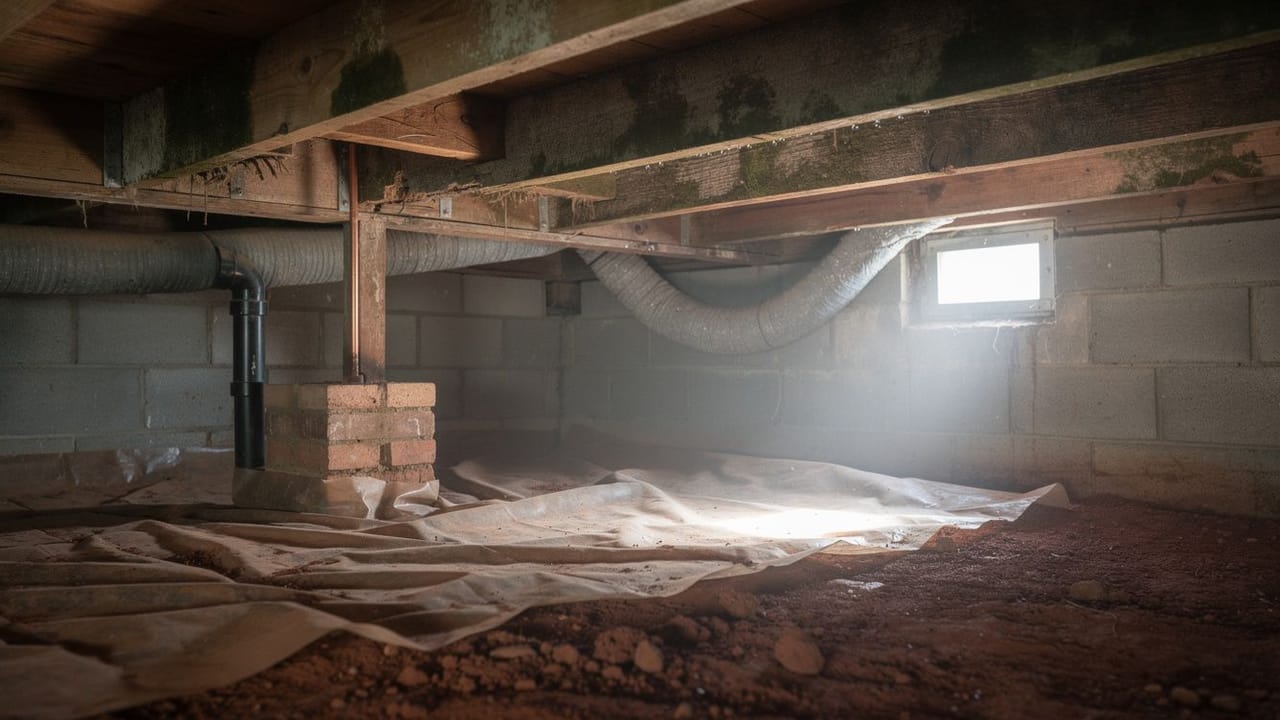
The smell is familiar to anyone who has lived in an older Nashville house: earthy, damp, and untouched by cleaning. A candle covers it for a while and then it is back. In a house built over a crawl space, it is often the smell of the crawl space, and it is in the rooms because the house is drawing air up from below. Once the mechanism is clear, the fix follows from it, and it is why the fix is mostly under the floor rather than on it. Finding where the damp is coming from is the first step in our moisture and dehumidification work.
How does crawl space air get into the house?
Air that leaves a house has to be replaced, and a good share of the replacement comes in low. The Building America Solution Center’s guide to air sealing sill plates explains that the stack effect naturally pulls air in through the lower part of a building, where the sill plate sits on the foundation. Its guide to air sealing plumbing and piping adds that air leaking in from unconditioned spaces such as a crawl space can affect indoor air quality, and it names the openings: holes for pipes through the bottom plates, rim joists and subfloor. The Solution Center’s guide to crawlspace ground covers makes the same point about the ground itself: moisture and soil gases that get into the crawl space can be pulled into the home through cracks in or around the subfloor.
Ductwork under the house can add another path. The Solution Center’s pre-retrofit assessment guide says that if ducts run through a vented crawl space that will not be sealed and insulated, they should be tested for air tightness. When a homeowner tells us the smell is worst while the system is running, the return ducts are one of the first things we look at.
What causes the musty smell?
A moldy smell with no visible source is one of the signs of hidden mold in EPA’s brief guide to mold, moisture and your home, and the same guide points out that no mold grows without water or moisture. The moisture is easy to come by in a vented crawl space. According to the Solution Center’s guide to unvented, insulated crawlspaces, in humid climates the vents let warm, humid air in to condense on the floor joists, which are likely to be cooler, especially when the rooms above are air conditioned. That summer pattern is the subject of our post on why a crawl space is wet in summer. For some households it is more than a nuisance: EPA’s page on mold and health says mold can cause allergic reactions in sensitive people and can trigger asthma episodes.
A musty or foul smell can also come from something other than mold. The pre-retrofit guide warns that a neglected crawl space can harbor wild animals, that a floor drain can let sewer gas in once its trap dries out, and that standing water has to be investigated and treated before other work begins. A sharp or sewer-like note is a different problem from ordinary mustiness, and it needs someone to go under the house and look, which is what a crawl space inspection is for. None of the patterns below is a rule, but they are how we decide where to look first.
- Worse after rain or in humid weather: we start with moisture
- Worse when the heat or air is running: we check the return ducts
- A sharp, sweet or sewer note: we look for a leak, a dry drain trap or an animal
What does not fix it
We do not count air fresheners, plug-ins or an air purifier upstairs as a fix, because none of them changes the damp below the floor that the smell comes from. Opening more crawl space vents in summer works against you: the ground cover guide says that in humid climates, water vapor in warm outdoor air comes in through the vents and condenses on cooler framing, and that building scientists recommend insulated, unvented crawlspaces there. Our post on crawl space vents covers that choice. Spraying the joists with a mold treatment without changing the humidity does not last either; EPA’s guide says that if you clean up mold but do not fix the water problem, the mold will most likely come back.
Sealing gaps from inside the rooms is worth doing where a gap is easy to reach, but many of the openings that matter are reached from below. The plumbing guide notes that pipe penetrations in an existing home may not be easy to get at and suggests working from the crawl space where it is accessible, and the sill plate guide lists crawl spaces among the places where the sill can be sealed. The place to stop crawl space air is mostly the crawl space.
What does
Most of the fix is drying the crawl space, and that starts with water. The Solution Center’s guide to water management in an existing crawlspace lists re-grading the ground to slope away from the house, gutters and downspouts that carry rain away from the foundation, sump pumps in the low spots of the floor, and a vapor barrier of 6-mil or thicker polyethylene covering the whole floor. Its guide to drains and sump pumps recommends one in crawlspaces with moisture issues or seasonal dampness, which is the part of the job handled by our drainage and sump work.
Then we deal with the air. In an encapsulation, the vents are closed off and the vapor retarder covers the floor and laps up the walls, the approach the unvented crawlspace guide lays out, and a dehumidifier keeps the humidity down. EPA’s guide recommends keeping indoor humidity below 60 percent, ideally between 30 and 50, and that is the range we aim for under the floor. Where mold is already growing, the pre-retrofit guide calls for a certified mold remediation expert to inspect it and set the cleanup protocol before other work goes ahead. Once the moisture is fixed, mold that has been cleaned is unlikely to return.
While we are under the house, we seal the duct returns, along with the larger floor penetrations and the sill plate where they can be reached. With the crawl space dry and closed, the air the house draws up comes from a dry space, and the smell upstairs should fade as the humidity comes down. If yours is still there, ask us for a free estimate and we will start under the floor.
Sources
- Building America Solution Center (PNNL), Air Sealing Sill Plates — The stack effect pulls air in through the lower part of the building at the sill plate; sill sealing where accessible, such as crawl spaces
- Building America Solution Center (PNNL), Air Sealing Plumbing and Piping — Air from a crawl space can affect indoor air quality; pipe holes through plates, rim joists and subfloor; access from the crawl space
- Building America Solution Center (PNNL), Capillary Break at Crawlspace Floors — Soil moisture and gases pulled into the home through the subfloor; vent air condenses on framing in humid climates; unvented crawlspaces recommended
- Building America Solution Center (PNNL), Pre-Retrofit Assessment of Crawlspaces and Basements — Test ducts in a vented crawl space; wild animals, dry drain traps and standing water; mold remediation expert before work
- Building America Solution Center (PNNL), Unvented, Insulated Crawlspaces — Vents encourage condensation on cooler joists in humid climates; vents filled and polyethylene on floor and walls
- US EPA, A Brief Guide to Mold, Moisture, and Your Home — Moldy smell as a sign of hidden mold; mold needs moisture; cleaned mold comes back unless the water is fixed; humidity below 60 percent, ideally 30 to 50
- US EPA, Mold and Health — Allergic reactions in sensitive people; mold can trigger asthma episodes
- Building America Solution Center (PNNL), Water Management of Existing Crawlspace Floor — Re-grading, gutters and downspouts, sump pumps in low areas, 6-mil polyethylene over the floor
- Building America Solution Center (PNNL), Drain or Sump Pump Installed in Basements or Crawlspaces — A drain or sump pump where there are moisture issues or seasonal dampness
FAQ
The Musty Smell Upstairs Starts in the Crawl Space — questions
Why does my house smell musty even after cleaning?
Often the smell is coming from below rather than from the rooms. The stack effect draws air in at the bottom of the house, through gaps around pipes, at the sill plate and in the subfloor, and ducts in the crawl space can add another path. If the crawl space is damp and growing mold, that is what reaches the rooms. Drying and sealing the crawl space deals with the source in a way that cleaning the rooms cannot.
Can crawl space mold make the house unhealthy?
Air leaking up from a crawl space can affect indoor air quality, and EPA notes that mold can cause allergic reactions in sensitive people and can trigger asthma episodes. Drying the crawl space takes away the moisture mold needs, which deals with the source rather than the symptom.
Will a dehumidifier in the crawl space stop the smell?
It works best as part of a sealed crawl space. In an open, vented one, the vents keep letting in humid outside air, which works against the unit. Control the water and close the space first, with a vapor barrier over the ground; then the dehumidifier can hold the humidity in the range EPA recommends, and the smell should fade as the space dries.
What does a musty smell smell like?
Earthy and damp, and cleaning does not shift it. A candle hides it only briefly. When there is no visible source, EPA counts a moldy smell as a sign of hidden mold, and in a house built over a crawl space that source is often under the floor.